There is nothing more frustrating than getting home after an amazing day in the field, loading your images onto the computer, and realising your favourite shot is soft. Sharpness is one of the biggest things that separates an average wildlife photo from one that really stands out. The good news is that getting sharper photos usually comes down to a few simple habits and techniques you can improve over time.
Here are five tips that will instantly help you capture sharper images in the field.
1. Use a Faster Shutter Speed
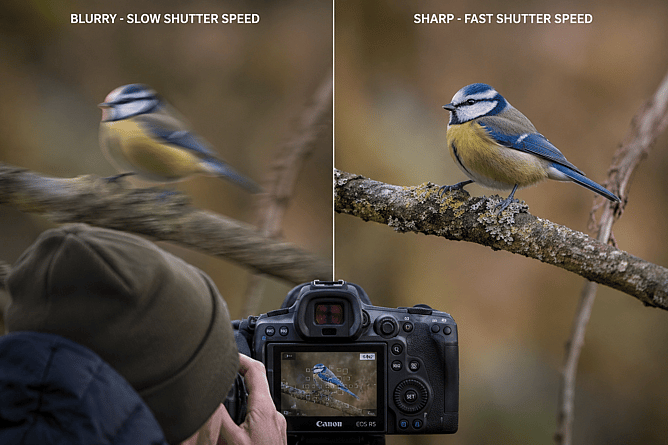
One of the most common reasons photos are soft is motion blur. Even the slightest movement from you or your subject can ruin sharpness, especially when photographing wildlife.
As a general rule, faster shutter speeds freeze motion better. Birds rarely stay perfectly still, and even perched birds can move their heads quickly enough to create blur.
For wildlife photography, I usually recommend:
Perched birds: around 1/1000s
Birds in flight: 1/2500s or faster
Fast action: 1/3200s or higher
Remember these are just guides
Modern cameras handle higher ISO much better than they used to, so don’t be afraid to increase your ISO if it means keeping your shutter speed high enough.
A noisy sharp image will almost always look better than a clean blurry one.
2. Focus on the Eye
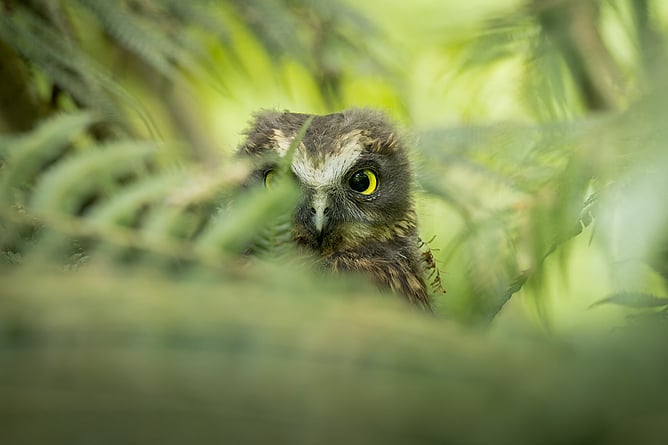
When people look at a wildlife photo, the first thing they notice is the eye. If the eye is sharp, the image feels sharp overall.
Many photographers accidentally focus on the body, wing, or beak instead of the eye, especially when using wider apertures where depth of field becomes very shallow.
Take your time and make sure your autofocus point or eye tracking locks onto the eye whenever possible. If the eye is soft, even the best composition or lighting will struggle to save the image.
This becomes even more important when shooting close-up portraits with long lenses and shallow depth of field.
3. Improve Your Technique and Stability
Sharpness is not only about camera settings. Your technique matters just as much.
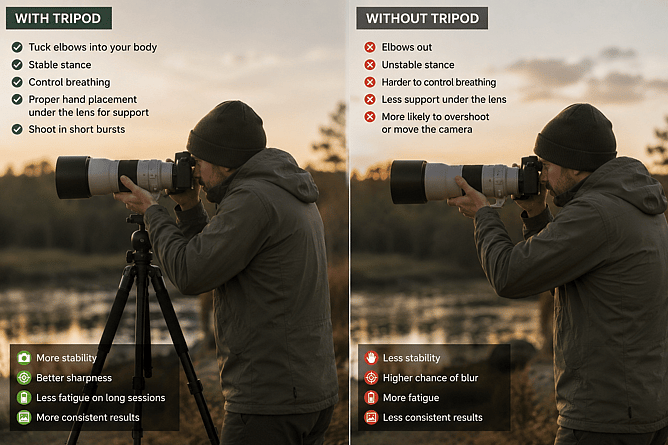
Small movements while handholding a long lens can introduce blur without you even noticing. Learning to hold your camera steady makes a massive difference.
A few simple things help:
Tuck your elbows into your body
Keep a stable stance
Control your breathing before taking the shot
Use proper hand placement under the lens for support
Shoot in short bursts rather than holding the shutter down continuously
If you are using heavier telephoto lenses, monopods or tripods can be really helpful and reduce fatigue and improve consistency over long sessions.
4. Don’t Shoot Wide Open All the Time
It can be tempting to always shoot at the widest aperture possible for creamy backgrounds, but many lenses become slightly softer wide open.
For example, if your lens opens to f/4, stopping down slightly to f/5 or f/5.6 can noticeably improve sharpness while still giving you beautiful background blur.
This also gives you a little extra depth of field, which can help keep more of the bird or animal in focus.
Sometimes the sharpest image is not the one with the blurriest background, it is the one with enough depth to hold detail where it matters.
5. Nail Your Autofocus Settings
Modern autofocus systems are incredibly powerful, but they still need the right settings for the situation.
One of the easiest mistakes photographers make is using the wrong autofocus mode for moving subjects.
For wildlife photography:
Use continuous autofocus (AI Servo / AF-C) for movement
Use subject or animal eye detection when available
Learn how your tracking settings behave
Avoid using large autofocus areas when branches or clutter are in the way
It also helps to practise regularly with moving subjects. The more familiar you become with your camera’s autofocus system, the more instinctive it becomes in fast situations.
Sharpness often comes down to consistency, and consistency comes from knowing your gear well.
Final Thoughts
Getting sharper photos is rarely about buying the newest camera or most expensive lens. In most cases, it comes down to improving technique, understanding light and movement, and learning how your camera behaves in the field.
The more you practise these habits, the more consistent your results will become.
Sharp wildlife photography is a combination of timing, stability, focus, and patience, and once those pieces start coming together, your images will improve dramatically.
Happy shooting everyone.